

A Crisis Never Builds Capability – It Reveals Whether It Was Built in Time
This executive essay examines why institutional capability - not operational efficiency alone - determines organisational resilience. It argues that crises do not create capability; they reveal whether governance, decision-making and leadership systems were built before disruption occurs.
AI / Digitalisation
Access to AI is expanding, but adoption alone does not establish better enterprise performance. For owners and CEOs, the investment decision starts with the workflows that materially affect earnings, cash, capacity, service or risk.
Bankability Is a Management Capability.
Why strategic relevance, information integrity and execution readiness still do not make a project investable.
48 JETP-aligned projects. More than USD 11 billion in identified financing needs. Only three with announced JETP-related financing by late September 2026.
The numbers point to a management distinction that matters well beyond energy: strategic relevance is not the same as investment readiness.

Bridging Change in Vietnam
Vietnam’s economy has become a magnet for foreign direct investment, tech expansion, and regional consolidation. Annual GDP growth consistently hovers around 6–7%. With over 100 million citizens, a young and tech-savvy labor force, and access to multiple FTAs, Vietnam is considered the “rising tiger” of ASEAN.
Yet: transformation efforts here often underperform or stall. Why?
Building Corporate Resilience
In a world of mounting disruption, contingency planning is no longer a luxury. It is a core leadership responsibility. This […]

Fewer Universities – Stronger Future?
Vietnam’s planned consolidation of its public higher-education system comes at an important point in the country’s development. As Vietnam advances towards its ambition of becoming a high-income economy by 2045, competitiveness will increasingly depend on productivity, innovation, technology and the ability of Vietnamese companies to create and retain more value.

From Credit Capacity to Productive Growth
Expanded financial flexibility can help Vietnam’s banks and companies finance longer investment cycles, but its real value will depend on disciplined capital allocation, transparent execution and stronger cash-flow performance.

From Disruption to Decision: Strengthening Management Response in Times of Volatility
From Disruption to Decision: Strengthening Management Response in Times of Volatility ViEt-TA was pleased to contribute to VSCN Talk #18, […]
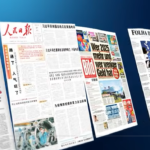
From Industrial Hubs to Growth Poles: Bac Ninh and Quang Ninh
In a recent contribution to VTV4’s The News, VIET-TA discusses what this transition requires and why governance capability, technology infrastructure and institutional coordination will become increasingly important as Vietnam moves toward a higher-value industrial model.
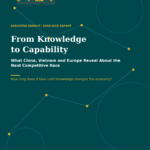
From Knowledge to Capability
What determines technological competitiveness: the amount of knowledge a country creates – or the speed at which that knowledge becomes capability?
China is tightening the links between universities, research and industry. Vietnam is simultaneously reshaping important parts of its science, technology and innovation system. Europe and Germany approach the same challenge from a very different starting point: they already possess strong institutions, but often face friction between them.
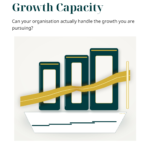
Growth Capacity
Demand can be strong while the organisation is already reaching its internal growth ceiling. This Executive Insight shows how owners and CEOs identify the first binding constraint across execution, management and finance - and build capacity before the next growth layer turns into strain.

Growth Continues. But Capital Descipline will shape who moves ahead
Vietnam’s growth story remains strong — but the environment for businesses is becoming more selective. As capital discipline increases and banks strengthen risk management, companies will increasingly be judged not only by growth potential, but by operational resilience, financial transparency, and execution capability.
This article explores why the next phase of Vietnam’s economic development may reward disciplined, adaptable companies more than rapid expansion alone — and why operational restructuring, liquidity control, and early strategic adjustment are becoming critical competitive advantages.

Leading from Within: How Top-Tier Coaching Guides Executives Through Transformation & Restructuring
Executive Summary Transformation in Vietnam requires leaders who combine strategic clarity, cultural fluency, and emotional resilience. Coaching is no longer […]
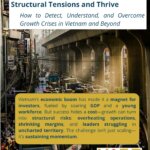
Leading through Growth Crisis: How Vietnam Enterprises can navigate Structural Tensions and Thrive
When Growth Turns Risky
Vietnam’s economic miracle over the past decades has been nothing short of remarkable. With GDP growth rates among the highest in Southeast Asia, a young and dynamic workforce, and increasing integration into global supply chains, Vietnam has become a regional magnet for investors and entrepreneurs alike.

Mandates reshaping US and European FDI
𝐓𝐡𝐞 𝐫𝐞𝐬𝐡𝐚𝐩𝐢𝐧𝐠 𝐨𝐟 𝐔𝐒 𝐚𝐧𝐝 𝐄𝐮𝐫𝐨𝐩𝐞𝐚𝐧 𝐅𝐃𝐈 𝐬𝐭𝐫𝐚𝐭𝐞𝐠𝐢𝐞𝐬 𝐢𝐧 𝐕𝐢𝐞𝐭𝐧𝐚𝐦 underscores a decisive shift from 𝐜𝐨𝐬𝐭-𝐝𝐫𝐢𝐯𝐞𝐧 𝐝𝐞𝐜𝐢𝐬𝐢𝐨𝐧𝐬 to 𝐬𝐲𝐬𝐭𝐞𝐦𝐢𝐜 𝐫𝐞𝐬𝐢𝐥𝐢𝐞𝐧𝐜𝐞 […]

Navigating the Tariff Tightrope: Transformation and Restructuring in Vietnam’s US-Exposed Industries
Abstract: The recent shifts in US trade policy present significant challenges for key sectors within Vietnam's economy. This article analyzes these impacts and underscores the critical need for strategic transformation and restructuring. VIET Transformation Advisors offers unparalleled expertise in guiding Vietnamese and Western managers through this complex landscape, ensuring resilience and fostering new avenues for growth.
One Business one Economic Truth
A company can have different reports for different legitimate purposes. It cannot afford different economic realities. As Vietnamese companies scale, raise institutional capital and enter cross-border ownership structures, the ability to reconcile operating reality, cash, accounting and management information becomes a strategic capability.
Pivotal stage of growth paves way for rise in M&As
Vietnam is entering a decisive phase where policy clarity, private-sector momentum, and disciplined execution are reshaping the country’s economic trajectory. […]
Reliable supply chains provide an edge
Vietnam’s export sector is entering a structurally different operating environment. What was once a logistics issue—shipment delays and route volatility—has escalated into a core management challenge affecting delivery reliability, working capital, and customer trust.

Resolution 10 and Vietnam’s Next FDI Chapter
Vietnam’s Resolution 10 marks a shift from attracting FDI to demanding measurable value creation. For business leaders, it signals a new standard: management quality will increasingly decide who benefits from Vietnam’s next growth phase.