Many Vietnamese companies are currently experiencing a subtle but significant shift: revenue remains stable, yet profitability weakens. Orders continue, customers are present, and operations stay active — but margins thin out, decisions slow down, and the familiar logic of growth feels less reliable. This is not a downturn; it is an in‑between phase where activity no longer guarantees economic stability.
Vietnam’s economy continues to grow strongly, but the mechanics of the market have changed. Customers compare more critically, capital flows more selectively, and global pressures increase costs across logistics, manufacturing, trade, and services. The result is a recurring pattern across industries: companies work hard, but not all work contributes to value creation.
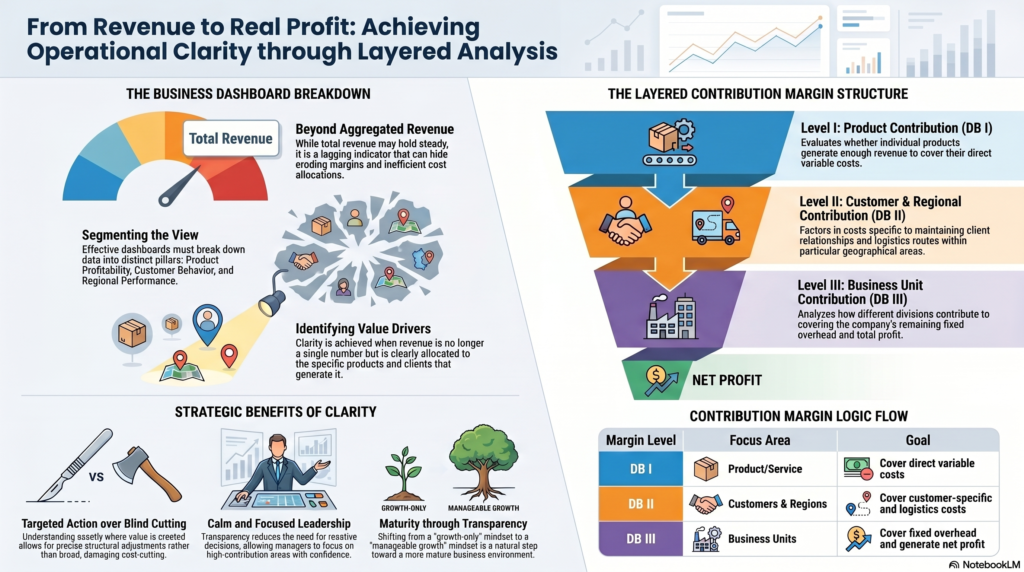
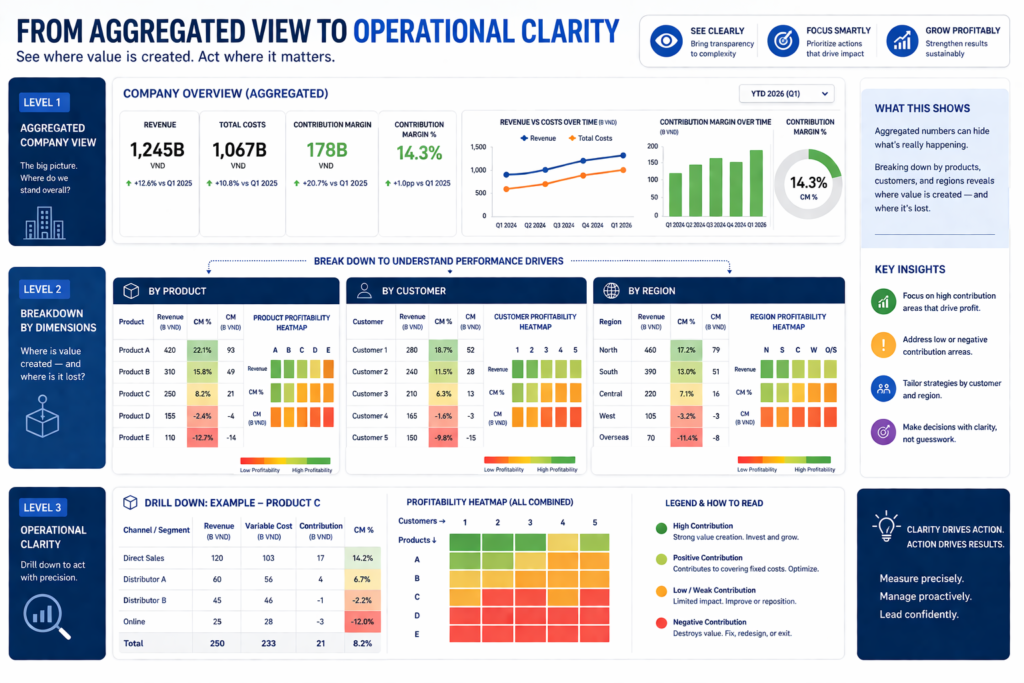
The core issue is often limited internal transparency. Aggregated financial views hide where profit is generated — and where it is lost. Many businesses still rely on full-cost accounting, which is too coarse for today’s environment. Without clear separation of fixed and variable costs or precise allocation of revenue to products, customers, and regions, leaders feel pressure without understanding its source.
The turning point comes with operational clarity. Contribution-margin analysis — applied across products, customers, regions, and business units — reveals the true drivers of performance. Once companies see which activities cover their costs and which erode value, decision-making becomes calmer, more focused, and more consistent. Structural adjustments become targeted rather than reactive.
Vietnam remains a dynamic, high‑potential market. But success now depends less on speed and more on clarity, flexibility, and manageable growth. Companies that build transparency into their operations regain control quickly — not by doing more, but by acting with precision.