Founder‑led companies often grow on the strength of one person’s judgement, relationships and persistence. This concentrated leadership model works exceptionally well in the early stages because decisions are fast, coordination costs are low and trust is personal. As the document notes, “the founder knows the customers, understands the informal commitments behind contracts, can resolve uncertainty quickly”. Over time, however, this strength becomes a structural dependency that limits institutional resilience.
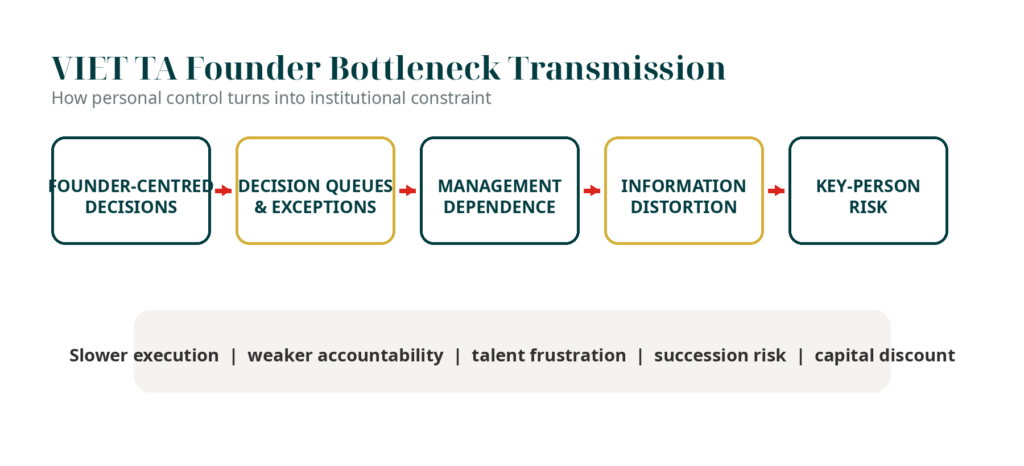
As the business expands, complexity increases faster than one individual can absorb. Managers begin to wait for the founder’s availability, and formal structures give way to a “shadow hierarchy” where real authority follows access and personal trust. This leads to inconsistent decisions, slower execution and weakened accountability, even if performance remains outwardly strong. The document highlights that “the organisation therefore becomes busy without becoming stronger”, illustrating how dependence quietly erodes capability.
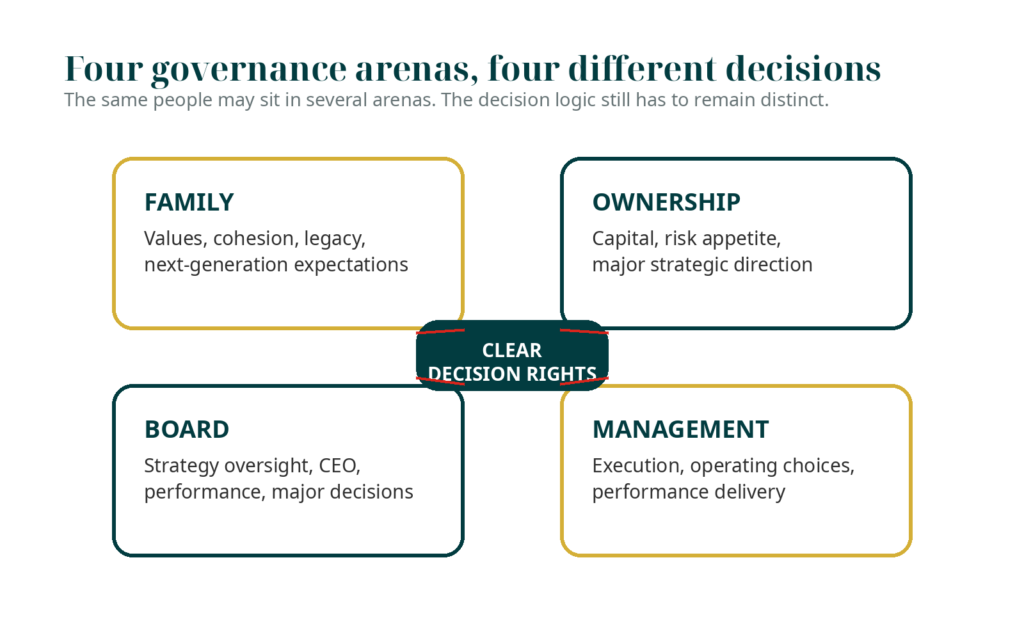
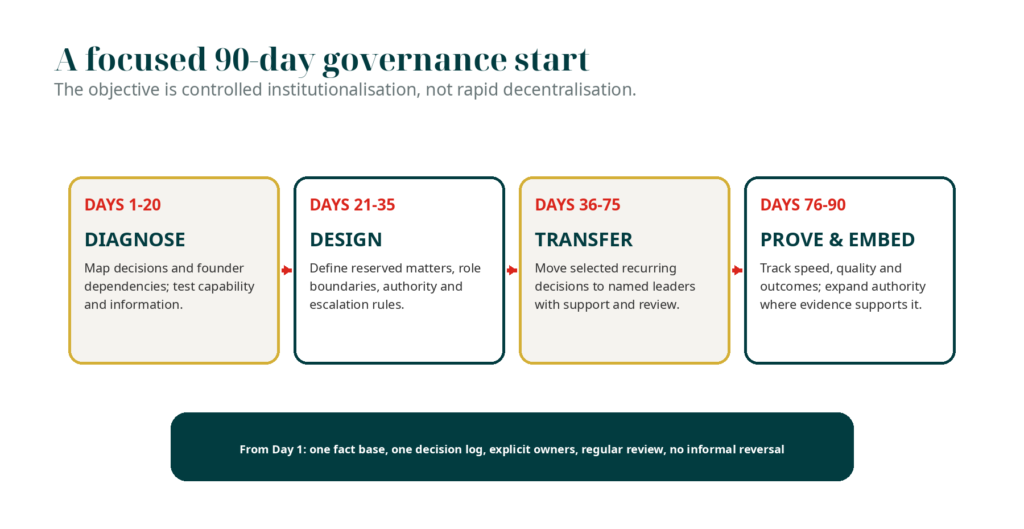
A sustainable transition requires clarity of roles, credible delegation and a management system that reinforces authority, information and accountability. Families, managers, banks and investors all benefit when decision rights and escalation paths are explicit rather than informal. The founder’s role should evolve toward stewarding purpose, relationships and long‑term continuity, rather than daily operational intervention. As the paper concludes, “the best time to make this transition is while the founder remains active, respected and able to shape it”, ensuring continuity and enterprise value.
Founder‑led companies often grow on the strength of one person’s judgement, relationships and persistence. This concentrated leadership model works exceptionally well in the early stages because decisions are fast, coordination costs are low and trust is personal. As the document notes, “the founder knows the customers, understands the informal commitments behind contracts, can resolve uncertainty quickly”. Over time, however, this strength becomes a structural dependency that limits institutional resilience.
As the business expands, complexity increases faster than one individual can absorb. Managers begin to wait for the founder’s availability, and formal structures give way to a “shadow hierarchy” where real authority follows access and personal trust. This leads to inconsistent decisions, slower execution and weakened accountability, even if performance remains outwardly strong. The document highlights that “the organisation therefore becomes busy without becoming stronger”, illustrating how dependence quietly erodes capability.
A sustainable transition requires clarity of roles, credible delegation and a management system that reinforces authority, information and accountability. Families, managers, banks and investors all benefit when decision rights and escalation paths are explicit rather than informal. The founder’s role should evolve toward stewarding purpose, relationships and long‑term continuity, rather than daily operational intervention. As the paper concludes, “the best time to make this transition is while the founder remains active, respected and able to shape it”, ensuring continuity and enterprise value.