

When the Tailwind Fades
A stronger order book can reflect better execution, a favourable market or a temporary advantage created by trade policy. The investment implications depend on which source is doing the work.
Original, self-authored insights on governance, transformation, and financial system reform.
A stronger order book can reflect better execution, a favourable market or a temporary advantage created by trade policy. The investment implications depend on which source is doing the work.
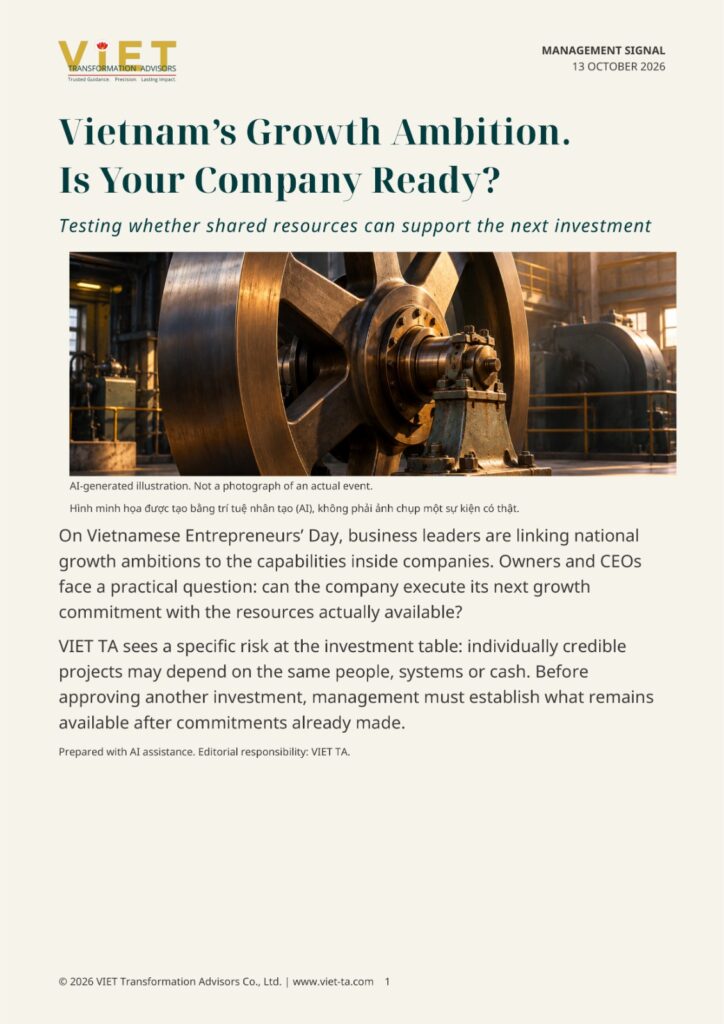
Business leaders are connecting Vietnam’s growth ambitions with stronger productivity, governance and technological capabilities. For owners and CEOs, the investment challenge is to turn those priorities into demonstrable enterprise performance
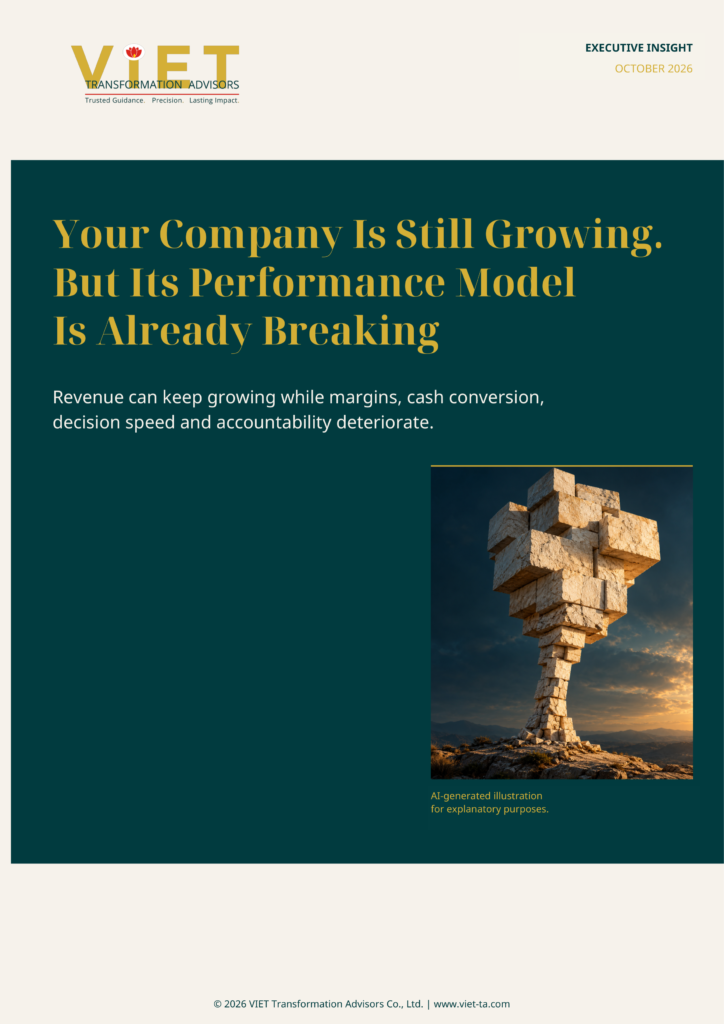
Revenue can keep growing while margins, cash conversion, decision speed and accountability deteriorate. This Executive Insight explains how to recognise the Scaling Gap and reset the management system before expansion begins to destroy value.
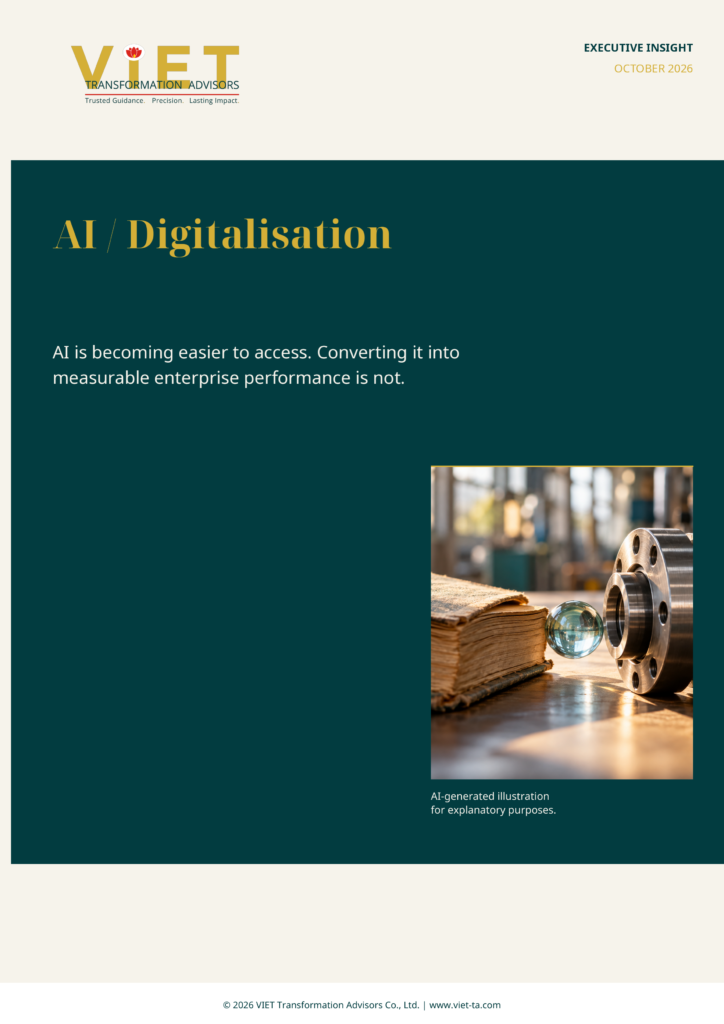
Access to AI is expanding, but adoption alone does not establish better enterprise performance. For owners and CEOs, the investment decision starts with the workflows that materially affect earnings, cash, capacity, service or risk.
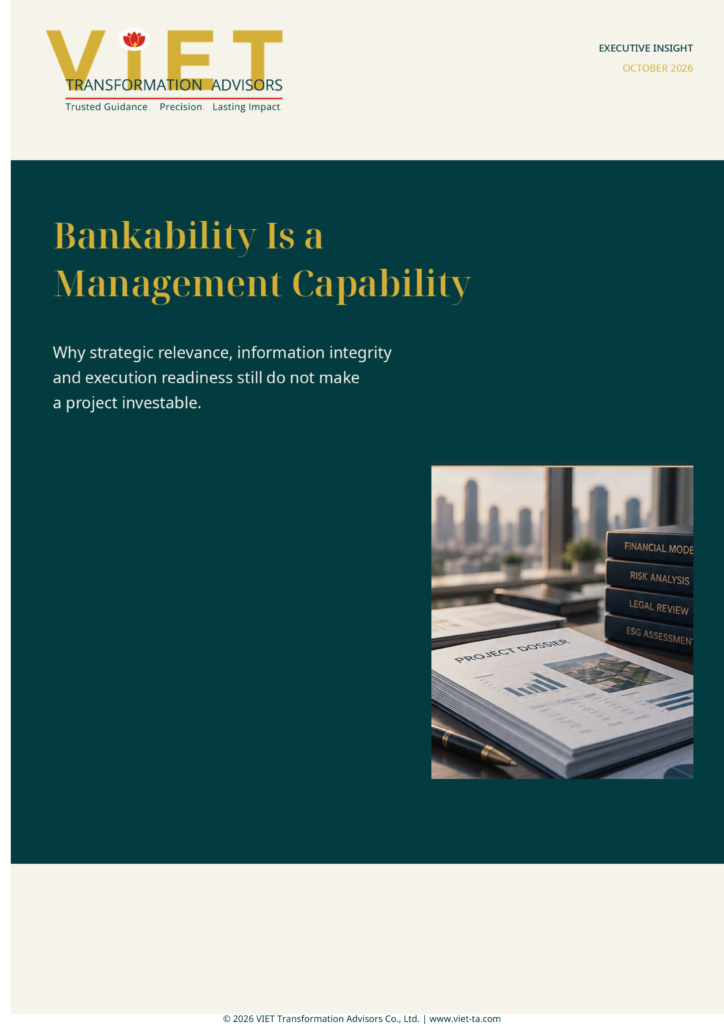
Why strategic relevance, information integrity and execution readiness still do not make a project investable.
48 JETP-aligned projects. More than USD 11 billion in identified financing needs. Only three with announced JETP-related financing by late September 2026.
The numbers point to a management distinction that matters well beyond energy: strategic relevance is not the same as investment readiness.
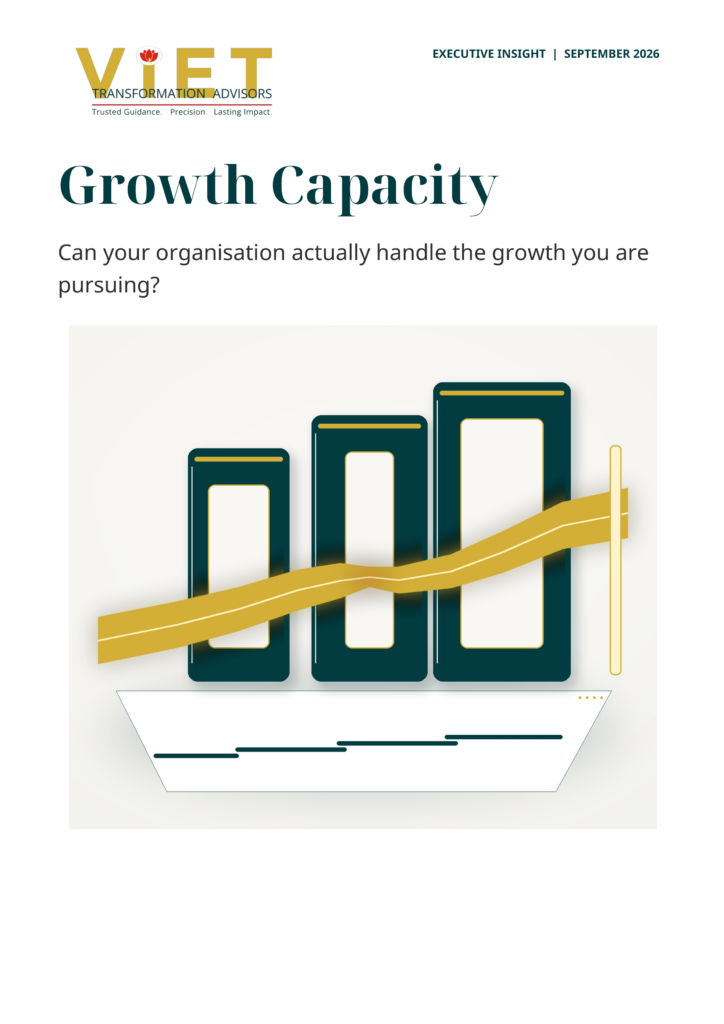
Demand can be strong while the organisation is already reaching its internal growth ceiling. This Executive Insight shows how owners and CEOs identify the first binding constraint across execution, management and finance – and build capacity before the next growth layer turns into strain.

Founder‑led success is a powerful advantage in early‑stage businesses, but it can become a bottleneck as complexity grows. This paper explains how founder dependence emerges, how it affects governance and performance, and what families, managers and investors need to see to trust the organisation’s future. It outlines a practical transition path that strengthens institutional capability without diminishing the founder’s influence. The goal is controlled institutionalisation—moving authority only where capability and information can support it.
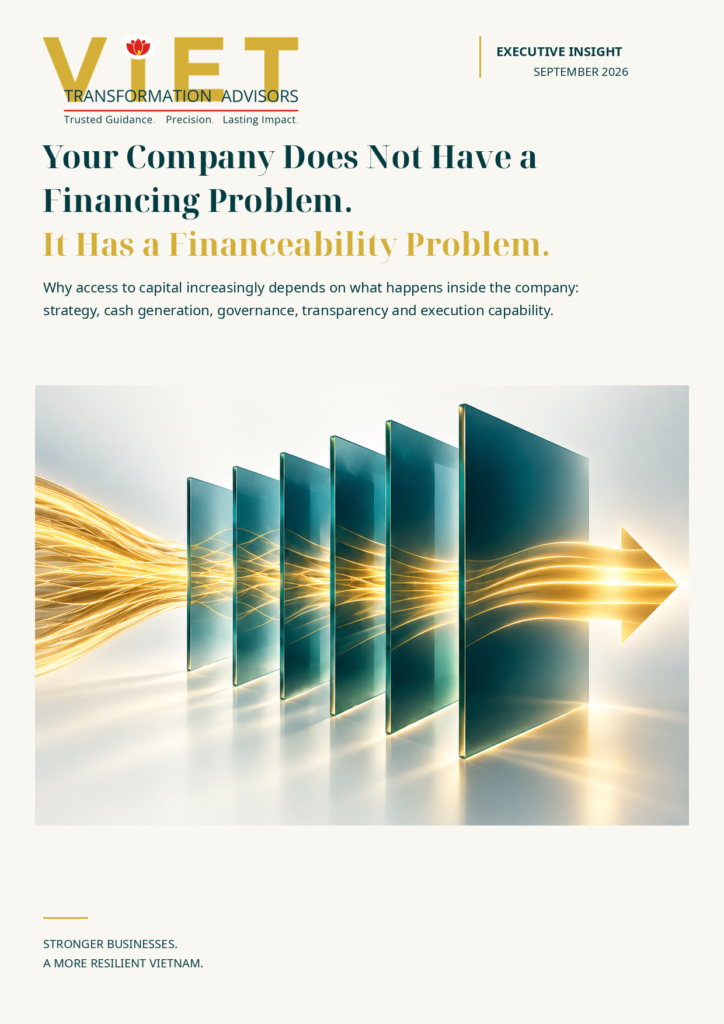
When access to capital tightens, management often starts with the lender. This Executive Insight starts with the company. It examines how strategy, economics, cash generation, transparency, governance and execution capability can shape the confidence of banks and investors long before a financing request is submitted – while distinguishing those internal factors from external funding constraints.

Vietnam’s strategic window is real, but opportunity alone does not create lasting advantage. The next challenge is to build Vietnamese enterprises with the scale, governance, capital, technology and international learning capability required to capture more value and compete beyond the domestic market.

Vietnam’s next development stage requires state transformation too. VIET TA introduces State Execution Productivity and a practical government operating model for faster, more predictable and measurable execution.
Recommended slug: /executive-insights/vietnam-2045-the-state-must-transform-too/